
Manual Hand Pallet Truck Technical Guide: Features, Working Mechanism & Maintenance (2.0 Ton to 3.0 Ton)
Updated: Apr 9

Manual Hand Pallet Truck Technical Guide for Warehouse & Industrial Use
Manual hand pallet trucks may appear simple in design, but their efficiency depends on a well-balanced hydraulic system, strong steel frame, and durable load wheels. Understanding the technical structure and maintenance requirements helps warehouse operators maximize equipment lifespan and ensure safe pallet handling.
HUB Solution manual hand pallet trucks are available in 2.0 ton, 2.5 ton, and 3.0 ton capacities, each designed to handle specific load intensities while maintaining operational reliability.
Although they operate without engines or electrical systems, their mechanical components must function precisely to deliver smooth lifting and movement.
Core Technical Components of a Manual Hand Pallet Truck
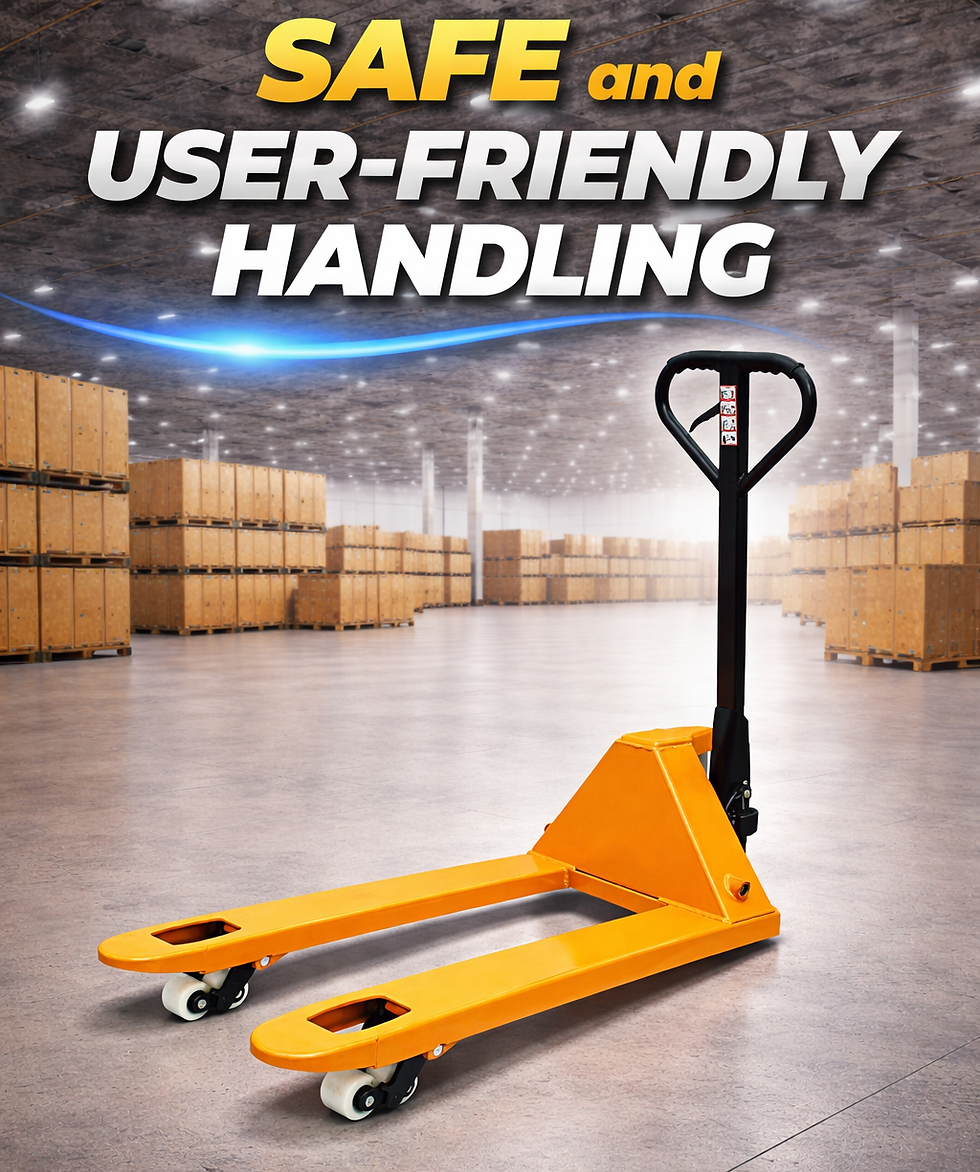
A manual pallet truck consists of several critical mechanical parts working together to lift and transport palletized goods efficiently.
Hydraulic Pump System
The hydraulic pump is the heart of the pallet truck. When the operator pumps the handle, hydraulic pressure is generated inside the cylinder, causing the forks to lift.
The system includes:
Hydraulic cylinder
Pump piston
Release valve mechanism
Oil reservoir
The quality of the hydraulic assembly determines lifting smoothness and load stability.
Steel Fork Structure
The forks are responsible for supporting pallet weight. They are constructed from high-strength steel and welded for structural stability.
Higher capacity models such as 3.0 ton include:
Thicker fork plates
Reinforced weld joints
Stronger load-bearing design
Structural strength directly impacts durability under heavy loads.
Steering Handle & Control Lever
The handle assembly allows the operator to:
Pump for lifting
Release for lowering
Control directional movement
An ergonomic handle improves operator comfort and reduces fatigue during repetitive operations.
Load Wheels & Entry Rollers
Load wheels support pallet weight during movement. High-quality wheels ensure smooth rolling on warehouse flooring.
Wheel types may vary depending on application:
Polyurethane wheels for smooth indoor floors
Nylon wheels for harder industrial surfaces
Wheel durability influences long-term performance.
Capacity-Based Technical Differences
While the working mechanism remains similar, structural reinforcement increases with capacity.
2.0 Ton Model
Standard hydraulic pressure tolerance
Moderate fork thickness
Suitable for lighter pallet loads
2.5 Ton Model
Improved hydraulic strength
Reinforced fork structure
Better load distribution support
3.0 Ton Model
Heavy-duty hydraulic cylinder
Stronger frame design
Designed for continuous heavy pallet handling
Higher tonnage models provide better safety margin and long-term durability.
How the Hydraulic Lifting Mechanism Works
When the operator pumps the handle:
The piston compresses hydraulic oil inside the cylinder.
Pressure builds up in the hydraulic chamber.
The forks gradually rise to lift the pallet.
The release lever allows controlled lowering of forks.
This simple yet effective system ensures precise lifting control without power supply.
Daily Inspection Checklist
To maintain consistent performance, operators should inspect:
Smoothness of lifting action
Hydraulic oil leakage
Fork alignment
Wheel wear condition
Release valve operation
Daily inspection helps identify minor issues before they become major problems.
Weekly Maintenance Recommendations
Weekly maintenance should include:
Cleaning dust and debris from moving parts
Checking wheel bearings
Inspecting weld joints
Testing lowering control mechanism
Ensuring smooth steering movement
Regular checks improve reliability.
Hydraulic Oil Maintenance
Hydraulic oil plays a critical role in lifting efficiency.
Ensure:
Oil level remains adequate
No contamination in oil
No leakage around cylinder seals
If lifting becomes uneven or slow, hydraulic inspection is necessary.
Wheel & Bearing Care
Load wheels carry the majority of pallet weight. Over time, continuous pressure may cause wear.
Maintenance should include:
Checking for cracks or flat spots
Lubricating bearings
Replacing worn wheels promptly
Proper wheel maintenance ensures smooth pallet movement and protects warehouse flooring.
Common Technical Issues & Prevention
Common issues include:
Hydraulic leakage
Fork bending due to overloading
Wheel wear from rough surfaces
Difficulty in steering
Preventive actions include:
Avoiding overloading
Performing routine lubrication
Using correct capacity model
Operating on suitable floor surfaces
Preventive care significantly extends equipment lifespan.
Safety & Technical Best Practices
To maintain safe operation:
Do not exceed rated capacity
Distribute load evenly
Avoid sudden directional changes
Keep forks fully inserted under pallet
Store equipment in dry conditions
Following technical guidelines reduces accident risk.
Long-Term Performance Strategy
To maximize service life:
Match pallet truck capacity with load weight
Schedule preventive maintenance
Train operators on proper usage
Monitor hydraulic performance regularly
Replace worn parts promptly
Even simple manual equipment benefits from structured maintenance planning.
Contribution of Technical Maintenance to Warehouse Efficiency
Properly maintained manual pallet trucks:
Reduce downtime
Improve lifting efficiency
Enhance operator safety
Support continuous workflow
Lower long-term replacement cost
Maintenance discipline directly impacts warehouse productivity.
Conclusion
Manual Hand Pallet Trucks may operate without engines or electronics, but their technical components require attention and proper care to ensure long-term performance.
HUB Solution manual pallet trucks in 2.0 ton, 2.5 ton, and 3.0 ton capacities are engineered for durability and consistent warehouse operation. Understanding their hydraulic system, structural design, and maintenance requirements helps businesses maximize reliability and operational efficiency.
Proper capacity selection combined with routine maintenance ensures smooth pallet movement, improved safety, and extended equipment lifespan.
📞 +91-6356980846


Comments