
Electric Hand Pallet Truck vs Manual Pallet Truck: Which is Better for Warehouse Operations?
Updated: Apr 9

Electric Hand Pallet Truck vs Manual Pallet Truck
In warehouse and industrial storage operations, pallet trucks are essential for transporting palletized goods over short distances. The two most commonly used types are the Manual Pallet Truck and the Electric Hand Pallet Truck.
While both machines are designed to lift and move pallets, their performance, efficiency, and suitability for different working environments vary significantly. Understanding the differences between electric and manual pallet trucks helps warehouse managers choose the right equipment for their operational needs.
HUB Solution provides Electric Hand Pallet Trucks in 1.5 ton, 2.0 ton, 2.5 ton, and 3.0 ton capacities, offering modern solutions for efficient material handling.
What is a Manual Pallet Truck?
A manual pallet truck is a simple mechanical device used to lift and move pallets by hand. The operator pumps the hydraulic handle to lift the pallet slightly off the ground and then pushes or pulls the truck manually.
Manual pallet trucks are commonly used in:
Small warehouses
Retail stores
Local storage areas
Occasional pallet movement operations
They are suitable for light-duty work and short travel distances.
What is an Electric Hand Pallet Truck?
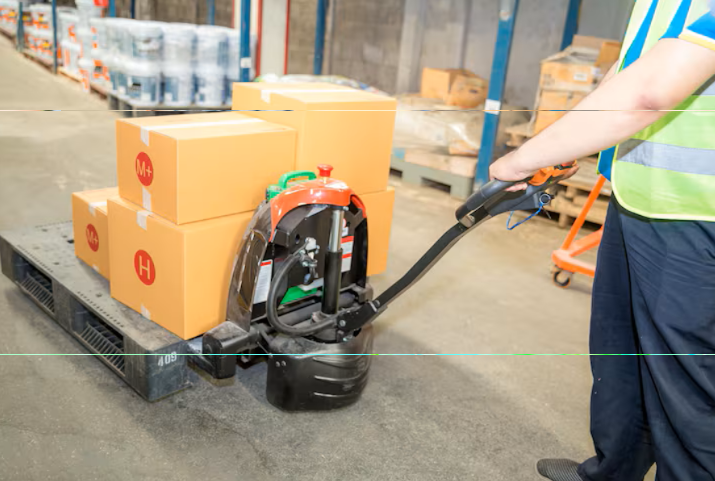
An Electric Hand Pallet Truck is powered by a rechargeable battery and electric motor. It uses motorized lifting and drive systems to move pallets with minimal physical effort from the operator.
Electric pallet trucks are widely used in:
Medium to large warehouses
Distribution centers
Manufacturing units
FMCG and pharmaceutical facilities
They are designed for frequent and continuous pallet movement.
Difference in Working Mechanism
Manual Pallet Truck Working
Operated fully by human effort
Hydraulic lifting through hand pumping
Manual pushing and pulling
Slower movement with heavy loads
Electric Hand Pallet Truck Working
Motorized lifting and driving
Controlled acceleration and braking
Smooth pallet movement
Reduced operator effort
The electric version provides more consistent and controlled performance, especially in high-volume operations.
Load Capacity Comparison
Manual pallet trucks are generally suitable for moderate loads but require significant effort when handling heavier pallets.
Electric Hand Pallet Trucks are available in multiple capacity options:
1.5 ton – Suitable for light warehouse goods
2.0 ton – Ideal for general warehouse use
2.5 ton – Suitable for heavier pallet loads
3.0 ton – Designed for heavy-duty industrial operations
Electric models handle heavier loads more comfortably due to motorized assistance.
Productivity and Efficiency
Manual Pallet Truck
Manual trucks are slower in high-volume environments. Operator fatigue increases over time, reducing productivity during long shifts.
Electric Hand Pallet Truck
Electric trucks significantly increase productivity by:
Moving pallets faster
Reducing physical strain
Supporting continuous operations
Improving workflow efficiency
For warehouses with frequent daily pallet movement, electric models provide clear productivity advantages.
Operator Comfort and Workplace Safety
Manual pallet trucks require pushing and pulling heavy loads, which can cause fatigue and increase the risk of strain injuries.
Electric pallet trucks improve safety by:
Reducing manual effort
Providing smooth acceleration
Offering automatic braking systems
Allowing better load control
This makes electric models more suitable for long working hours and heavy workloads.
Maneuverability and Space Usage
Manual pallet trucks are compact and simple but may be harder to control with heavy loads in narrow aisles.
Electric Hand Pallet Trucks are designed with:
Compact structure
Smooth steering
Stable load control
They operate efficiently in narrow warehouse layouts and high-density storage areas.
Application-Based Comparison
When to Choose Manual Pallet Truck
Low pallet movement frequency
Light loads
Small storage areas
Short transport distances
When to Choose Electric Hand Pallet Truck
Frequent daily pallet movement
Heavier loads
Long working shifts
Medium to large warehouses
Understanding your operational demand is key to choosing the right machine.
Long-Term Operational Suitability
Manual pallet trucks are suitable for occasional or backup use. For continuous daily operations, they may slow down performance.
Electric Hand Pallet Trucks are designed for long-term, high-frequency use. Their motorized system ensures consistent performance and better workflow management.
Warehouses planning growth and expansion often prefer electric models for better scalability.
Maintenance Requirements
Manual pallet trucks require:
Hydraulic oil checks
Wheel inspection
Basic lubrication
Electric pallet trucks require:
Battery charging and inspection
Drive and lift system checks
Brake and control system inspection
Although electric trucks require more maintenance, they offer higher operational efficiency.
Environmental Considerations
Manual pallet trucks do not consume power but rely heavily on human effort.
Electric Hand Pallet Trucks:
Produce no exhaust emissions
Operate quietly
Support cleaner indoor warehouse environments
They are suitable for enclosed storage areas and industries such as pharmaceuticals and food processing.
Cost vs Operational Value (Without Price Mention)
While manual pallet trucks are simpler, electric pallet trucks provide higher operational value in environments where speed, safety, and productivity are priorities.
Electric models reduce downtime, improve workflow, and minimize physical strain on employees, contributing to overall warehouse efficiency.
Conclusion
Both Manual Pallet Trucks and Electric Hand Pallet Trucks play important roles in material handling operations. Manual trucks are suitable for light and occasional use, while electric trucks are ideal for high-frequency and heavy-duty operations.
HUB Solution Electric Hand Pallet Trucks in 1.5 ton, 2.0 ton, 2.5 ton, and 3.0 ton capacities offer efficient and reliable solutions for modern warehouses. Selecting the right model ensures improved productivity, enhanced safety, and smooth internal material flow.
📞 +91-6356980846


Comments