
1.5 Ton vs 3.0 Ton vs 5.0 Ton Diesel Forklift – Which Heavy-Duty Model Should You Choose?
Updated: Apr 9
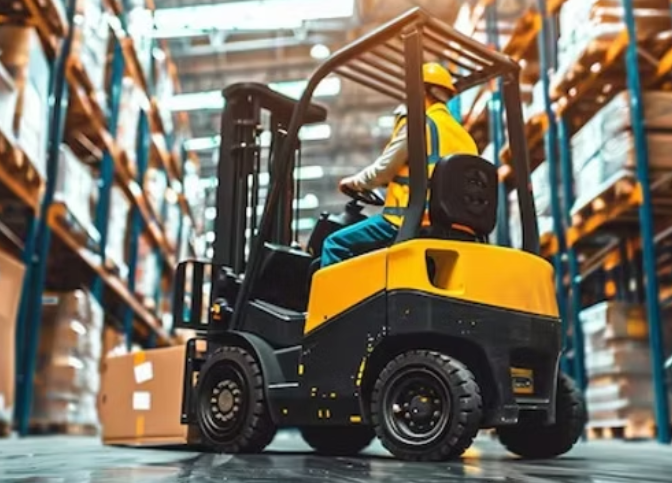
Choosing the right diesel forklift capacity is one of the most critical decisions in industrial material handling. While all diesel forklifts are built for rugged environments and high torque performance, the difference between a 1.5 ton, 3.0 ton, and 5.0 ton diesel forklift significantly impacts load stability, engine efficiency, terrain handling, and long-term durability.
HUBMAX diesel forklifts are engineered to serve diverse heavy-duty applications, from moderate outdoor yard handling to large-scale infrastructure and bulk material movement. Selecting the correct capacity ensures not only operational efficiency but also structural safety and long equipment lifespan.
Understanding how these models differ helps businesses align equipment selection with actual industrial demand.
Why Diesel Forklift Capacity Matters in Industrial Operations
In heavy industrial environments, pallet weight and terrain conditions directly affect equipment stress levels. A diesel forklift operating below its rated capacity performs efficiently with reduced mechanical strain. However, using an under-capacity forklift for heavier loads increases hydraulic pressure, reduces engine lifespan, and compromises stability.
Capacity selection affects:
Engine torque output Hydraulic lifting strength Chassis reinforcement level Load center stability Operational durability
A properly matched diesel forklift improves safety margins and prevents premature wear.
1.5 Ton Diesel Forklift – Moderate Industrial Utility
The 1.5 ton diesel forklift is suitable for moderate outdoor and semi-industrial environments where pallet weights are controlled and consistent. It offers engine-powered lifting capability while maintaining compact maneuverability in smaller yard spaces.
This model is commonly used in smaller manufacturing units, medium warehouse yards, and construction material depots. While it provides sufficient torque for moderate pallet loads, it is not designed for extremely dense industrial materials.
The advantage of a 1.5 ton diesel forklift lies in its balance between power and flexibility. It performs efficiently in environments where heavy-duty lifting is occasional rather than continuous.
3.0 Ton Diesel Forklift – Standard Heavy-Duty Industrial Workhorse
The 3.0 ton diesel forklift is widely regarded as the most versatile heavy-duty capacity in industrial sectors. It offers a substantial increase in lifting strength compared to 1.5 ton models while maintaining operational stability on uneven terrain.
Manufacturing plants, steel yards, cement warehouses, and logistics hubs frequently rely on 3.0 ton diesel forklifts for consistent pallet movement. The reinforced mast system and stronger hydraulic cylinder ensure stable lifting even when handling dense industrial loads.
This capacity provides a strong balance between heavy-duty capability and operational efficiency, making it the most commonly selected diesel forklift for general industrial use.
5.0 Ton Diesel Forklift – Maximum Heavy Industrial Power
The 5.0 ton diesel forklift is engineered for high-intensity industrial environments where pallet loads are significantly heavier and bulkier. It is built with a reinforced chassis structure, higher torque engine output, and enhanced hydraulic pressure tolerance.
Industries such as infrastructure development, heavy machinery manufacturing, container yards, and bulk material storage require the strength of a 5.0 ton diesel forklift. This model ensures superior load stability and structural integrity under extreme lifting conditions.
The 5.0 ton capacity is ideal for businesses handling large industrial components or operating in demanding outdoor terrains where safety margin is critical.
Structural and Performance Differences Between Capacities
As diesel forklift capacity increases, structural reinforcement becomes more substantial. A 1.5 ton model includes moderate frame thickness and hydraulic strength suitable for controlled loads. A 3.0 ton forklift features thicker mast channels, improved counterweight balance, and higher engine torque. A 5.0 ton forklift incorporates heavy-duty steel construction, reinforced load-bearing components, and advanced cooling systems for extended operation.
These structural upgrades ensure improved stability and durability as lifting capacity increases.
Terrain and Outdoor Performance Comparison
Diesel forklifts are often deployed on gravel surfaces, construction sites, and uneven industrial yards. In such environments, higher capacity models provide better traction and balance.
A 1.5 ton diesel forklift can operate effectively on moderately uneven terrain. A 3.0 ton model offers improved stability on rough surfaces. A 5.0 ton diesel forklift performs best in rugged industrial settings where heavy loads and unstable ground conditions coexist.
Terrain handling ability increases with structural weight and tire strength.
Operational Frequency and Workload Intensity
Operational intensity plays a major role in forklift selection. For light-to-moderate industrial shifts, a 1.5 ton diesel forklift may be sufficient. For multi-shift operations involving continuous heavy pallet movement, a 3.0 ton forklift offers stronger reliability.
In high-volume industrial projects or large infrastructure sites, the 5.0 ton diesel forklift ensures consistent performance under prolonged heavy-duty workload.
Matching forklift capacity with workload intensity prevents mechanical stress and enhances operational longevity.
Fuel Efficiency and Engine Performance
While higher capacity diesel forklifts consume more fuel due to larger engines, they provide stronger torque and improved lifting margin. Businesses must balance fuel consumption with performance demand.
A 1.5 ton forklift may offer better fuel economy for lighter tasks, whereas 3.0 ton and 5.0 ton forklifts provide greater lifting strength and operational confidence for heavy-duty applications.
Choosing the right model ensures optimal engine efficiency without compromising industrial performance.
Long-Term Industrial Planning
When planning for future growth, selecting a slightly higher capacity forklift can provide operational flexibility. Many industries prefer upgrading from 1.5 ton to 3.0 ton to accommodate increasing pallet weight over time.
Similarly, businesses handling expanding infrastructure or bulk materials may find the 5.0 ton diesel forklift a strategic long-term investment.
Capacity planning should align with projected industrial expansion and operational scaling.
Conclusion
Choosing between a 1.5 ton, 3.0 ton, and 5.0 ton diesel forklift depends on pallet weight, terrain conditions, workload intensity, and long-term industrial strategy.
The 1.5 ton diesel forklift suits moderate industrial tasks. The 3.0 ton diesel forklift serves as a balanced heavy-duty workhorse. The 5.0 ton diesel forklift delivers maximum industrial lifting power for large-scale operations.
HUB Solution diesel forklifts are engineered to provide strength, durability, and operational stability across all capacity levels. Selecting the correct model ensures safe heavy-load handling and sustainable industrial productivity.
📞 +91-6356980846


Comments